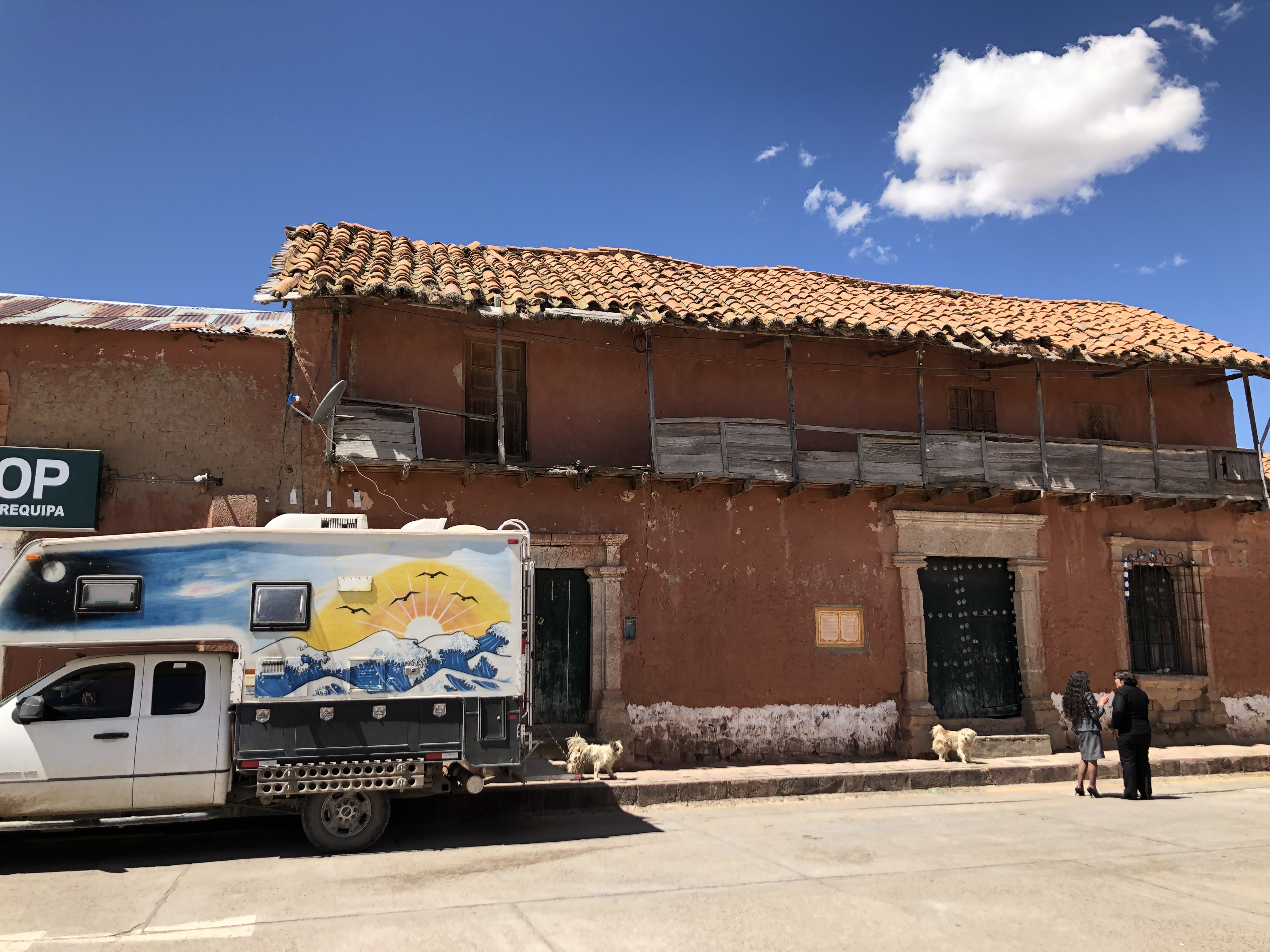
Exploring the area near Colca Canyon and the surroundings, known as the pampa of Peru is like setting off to camp on the grasslands. Be prepared to see absolutely nothing for a few days in a row.


The views are vast, the weather is harsh, and the days are long and lonely. This is a desolate region, with high elevation, cold weather and few settlements. We did find a few interesting things to report to you about, though. 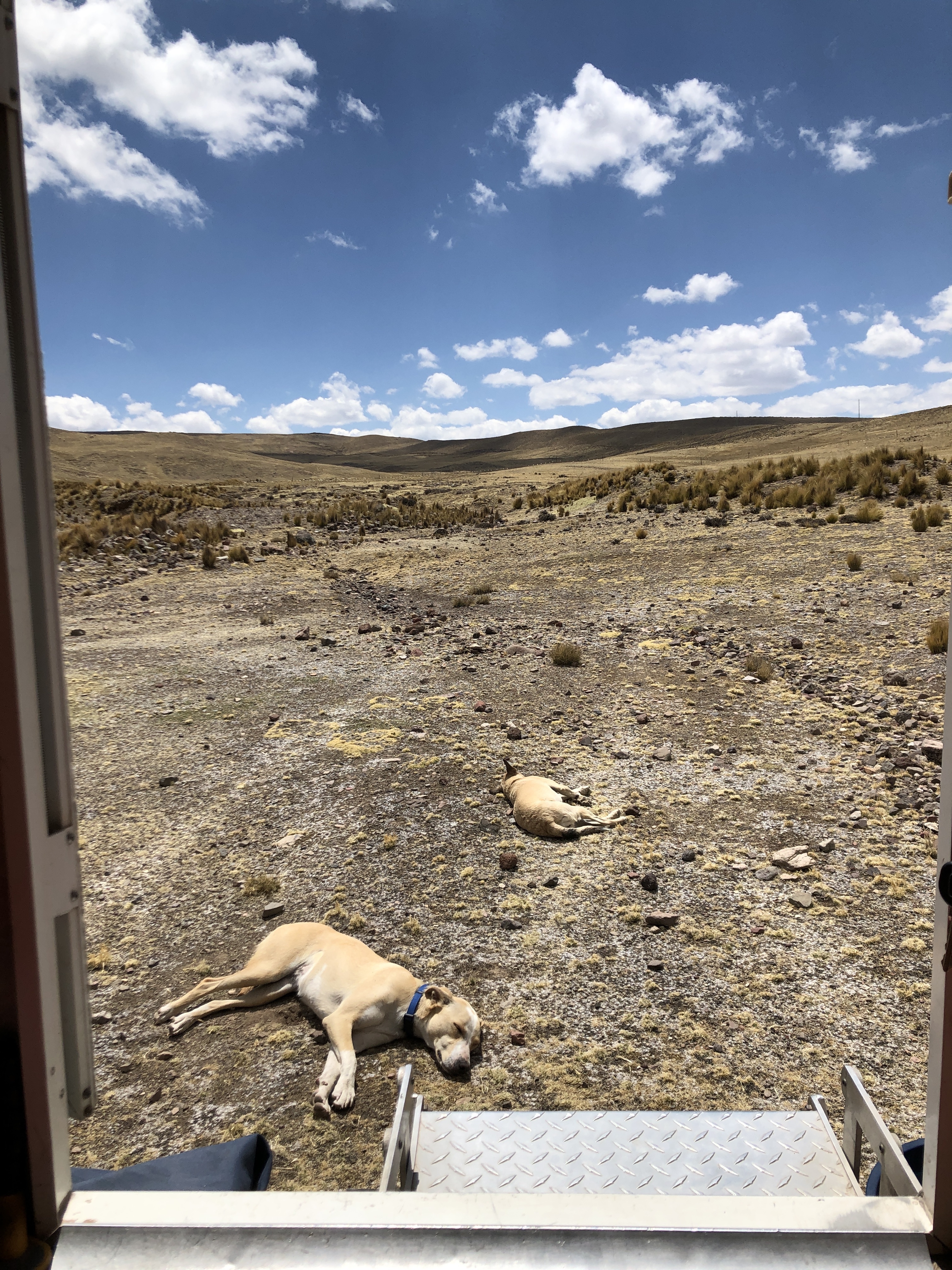

At our first campsite we found a small cow skull abandoned in a bush. With a few zip ties, it became an artifact on the front of the truck. This simple hunk of bone captures a lot of attention as we drive through cities. There is a new level of pointing and staring taking place as we pass by the curious villagers. 

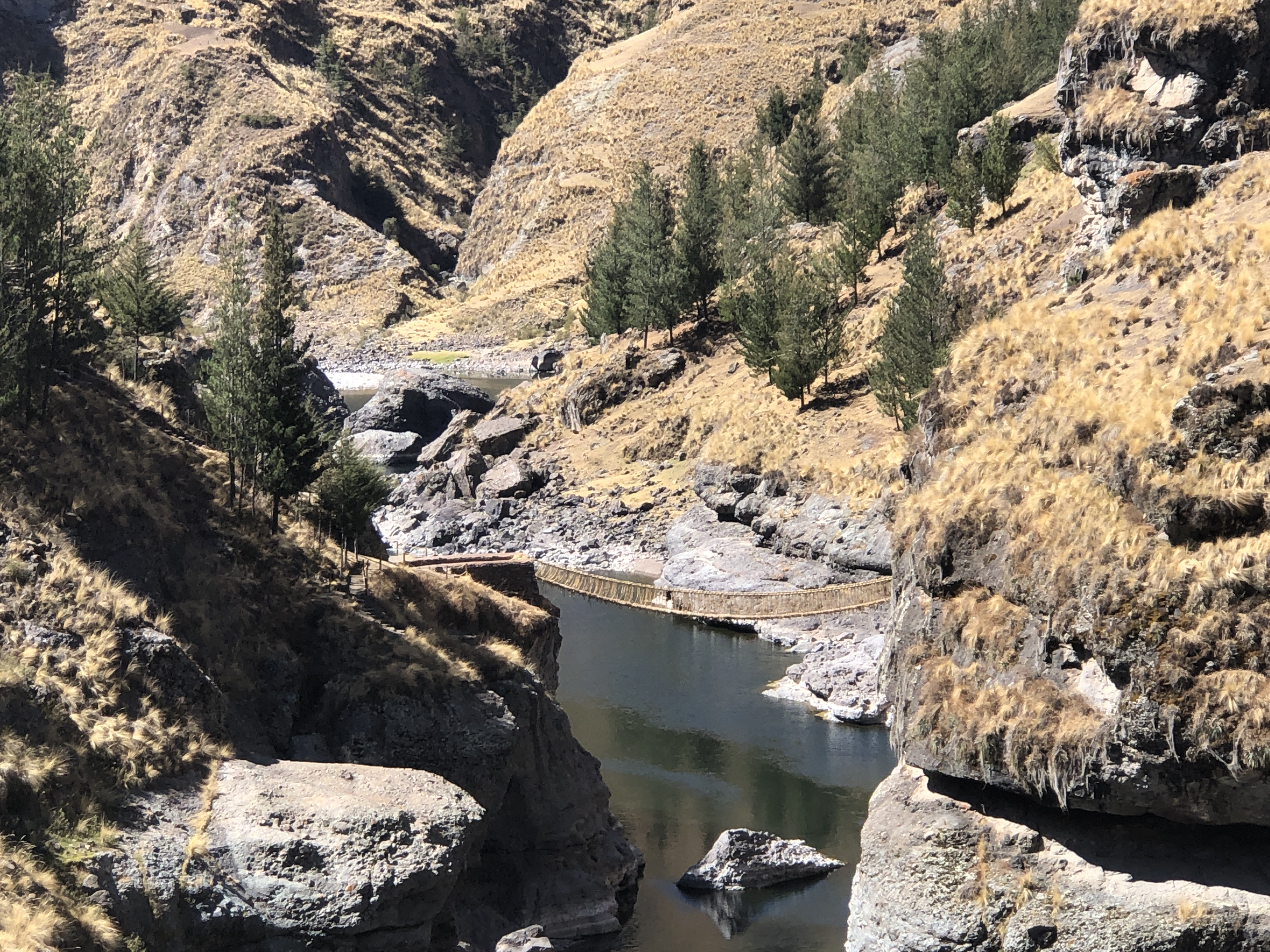
We took a little detour to check out an Inca rope bridge called Queshuachaca. The location and construction methods date back to Inca times. But this particular rope bridge is rebuilt every year by the community members. 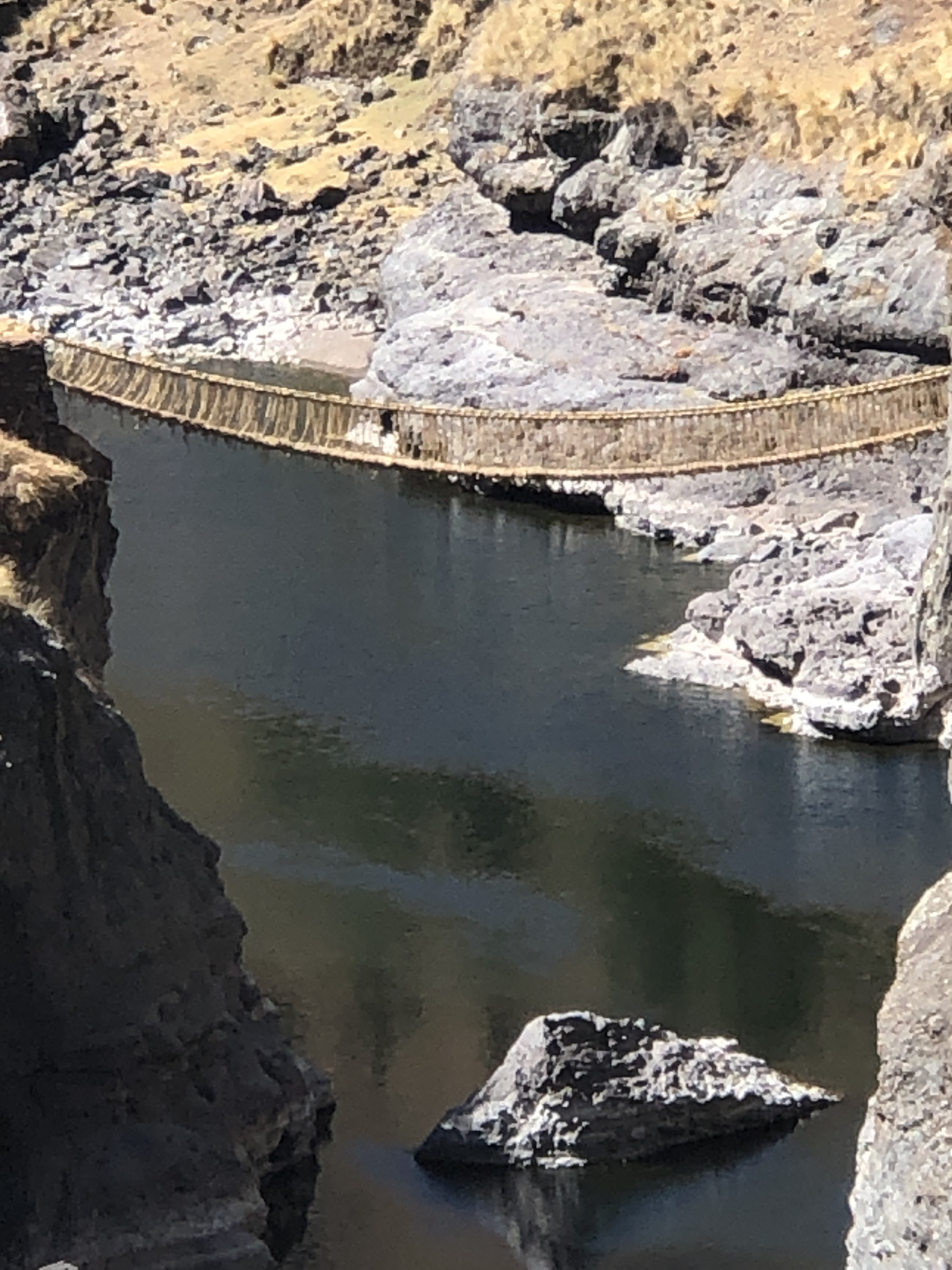

Every Spring (usually in June) the communities surrounding this passage come together for a festival of bridge making. Every family must bring about 70 feet of handmade rope to contribute to the bridge. Then the rope sections are woven together into the bridge structure and shape. Once it is prepared, the new bridge is put in place and the old bridge is cut loose and allowed to decompose in the river. This annual community celebration is recognized by UNESCO and has been taking place for countless generations.


This man is demonstrating the process of making the rope for the bridge. The rope for the bridge is made by hand, using materials gathered from higher up on the pampa (grasslands). The grasses are first soaked in water. Then a small pinch of fibers is placed in each hand. These are then pressed together firmly and rolled tightly between the palms.


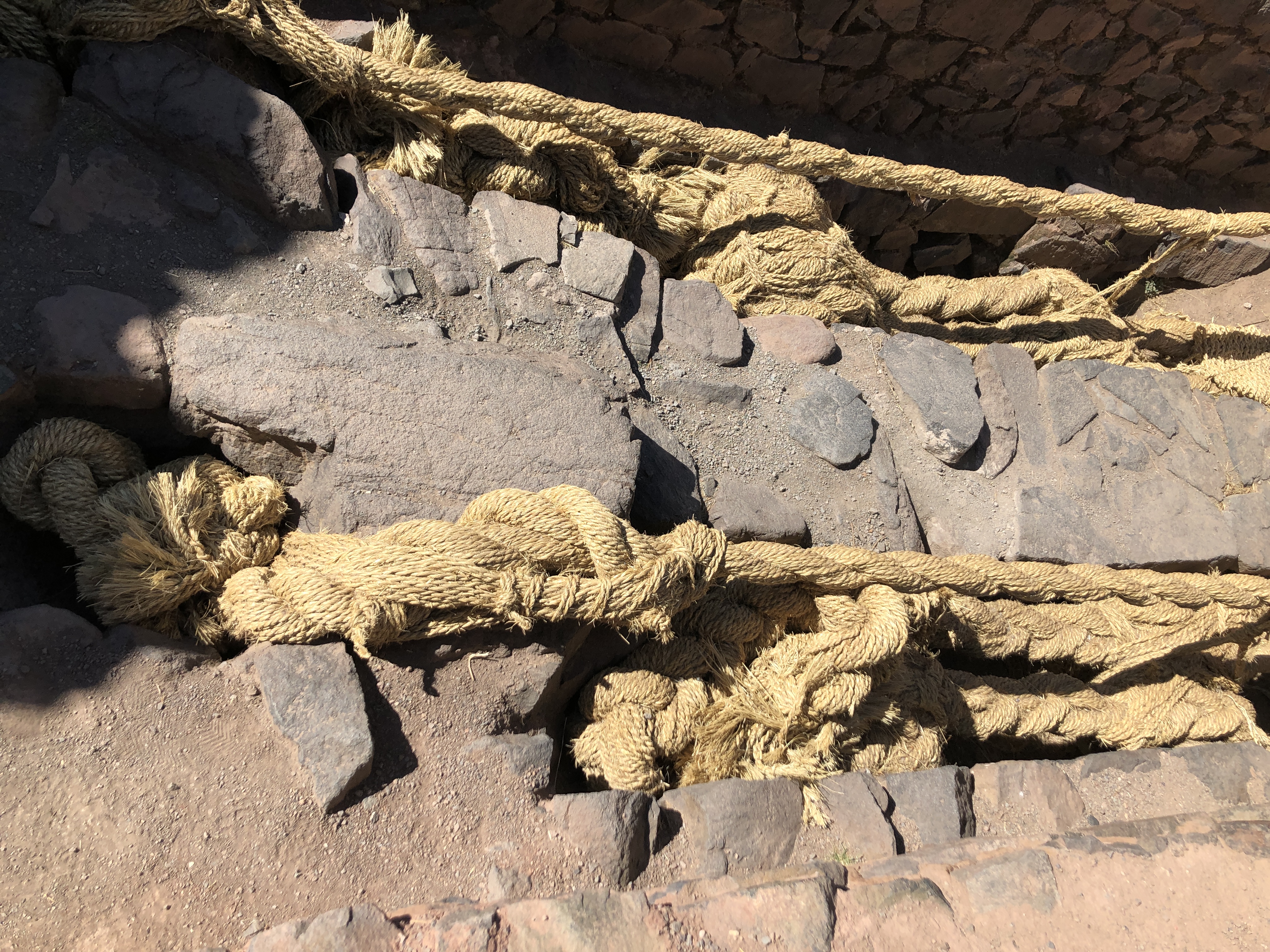
The bridge is held in place by long, knotted sections of rope which are wedged around and under huge carved stones. This is also moved and replaced annually to ensure strength and safety. 


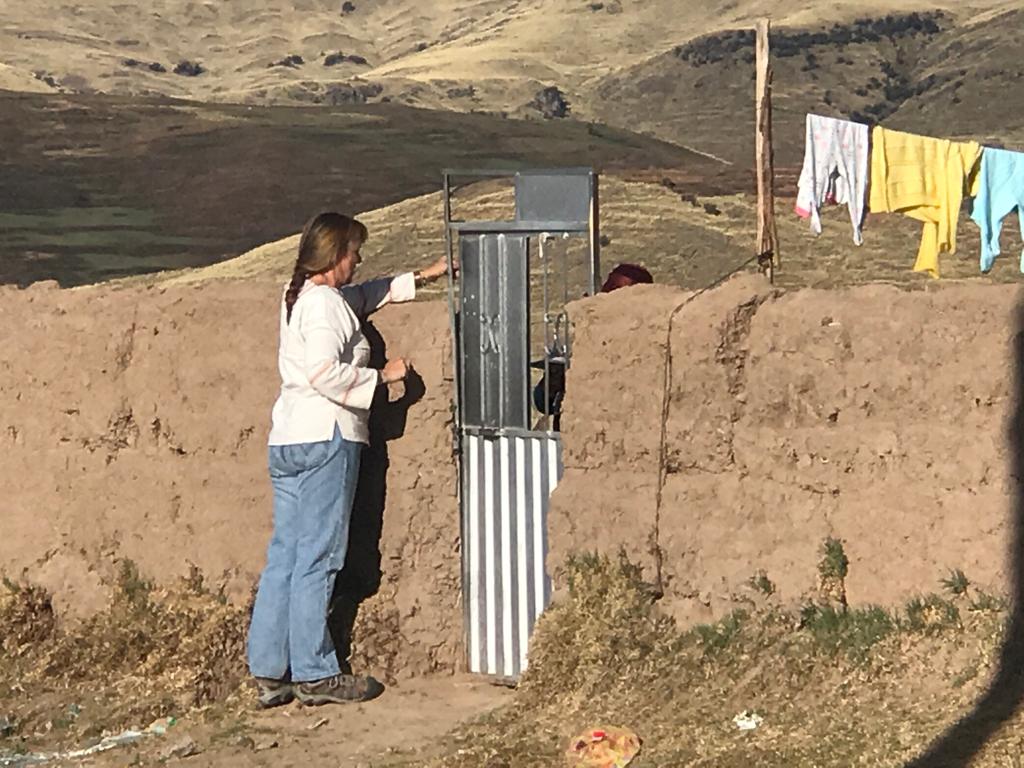
A few weeks ago we bought a bedspread to help manage the dog hair on our bed. But it turned out to be too large for the space up there. So we folded it up and have been carrying it for a while. While driving in this region we went through a sparsely populated area and passed a small house. This house was made of cinder blocks and had no doors or windows. (at this high, cold elevation) We noticed baby clothes drying on a line in the yard. At that moment we decided that these were the folks to get that big, fluffy bedspread. I took the huge bundle, plus some coloring books, crayon and kids shoes over to the gate. The mom was sitting on the ground knitting. Nearby was a pig and twin girls playing in the dirt yard. They all eyed me suspiciously, but when I said I had a gift for her, she threw down her knitting and rushed to the gate. She was nearly crying as she looked at the stuff I was passing over the fence. 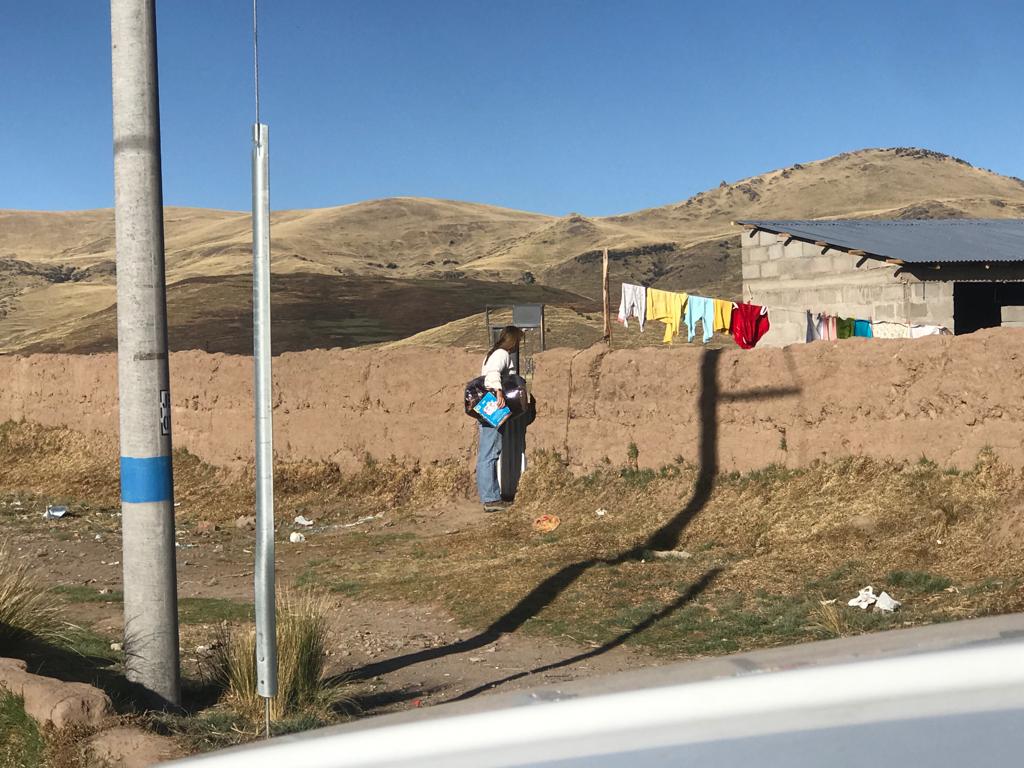


We stopped in a town to buy groceries, gas and dog food. Just after we parked, we heard music and turned to see a parade coming our direction. The local schools were presenting their end-of-year show in the form of a big parade.


Every grade level had learned a traditional dance and prepared colorful, elaborate costumes. It was fun to watch the dancers enjoying the celebration and the townspeople appreciating the show. The entire parade lasted nearly 30 minutes and then the streets cleared and we all went about our daily business.



Continuing along the river on the outskirts of town we bumped and jostled along a narrow, dirt road. Finally we found him, Juanito the fisherman. 


We found additional tombs nearby at the Tumbas Shininea. 


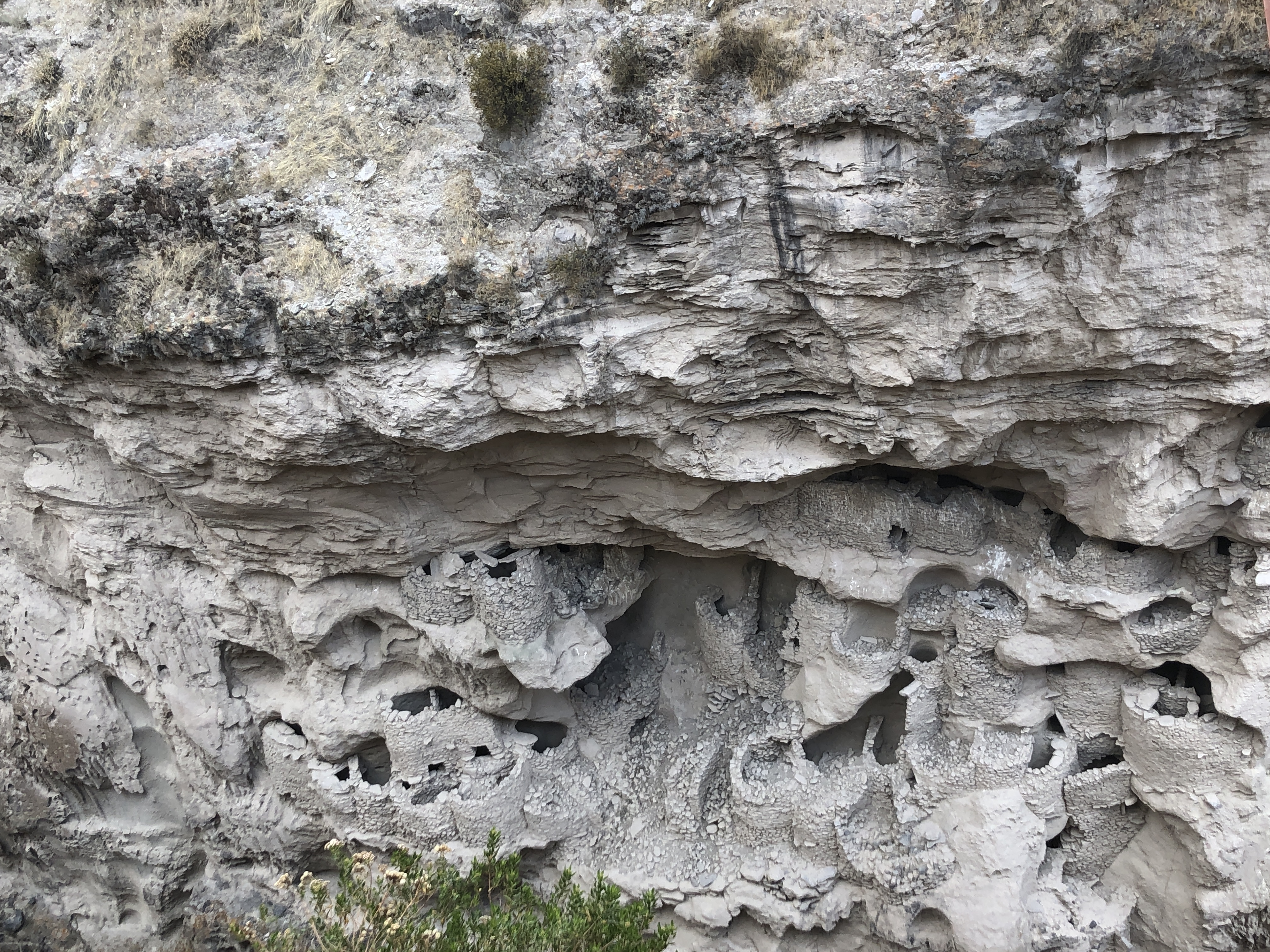


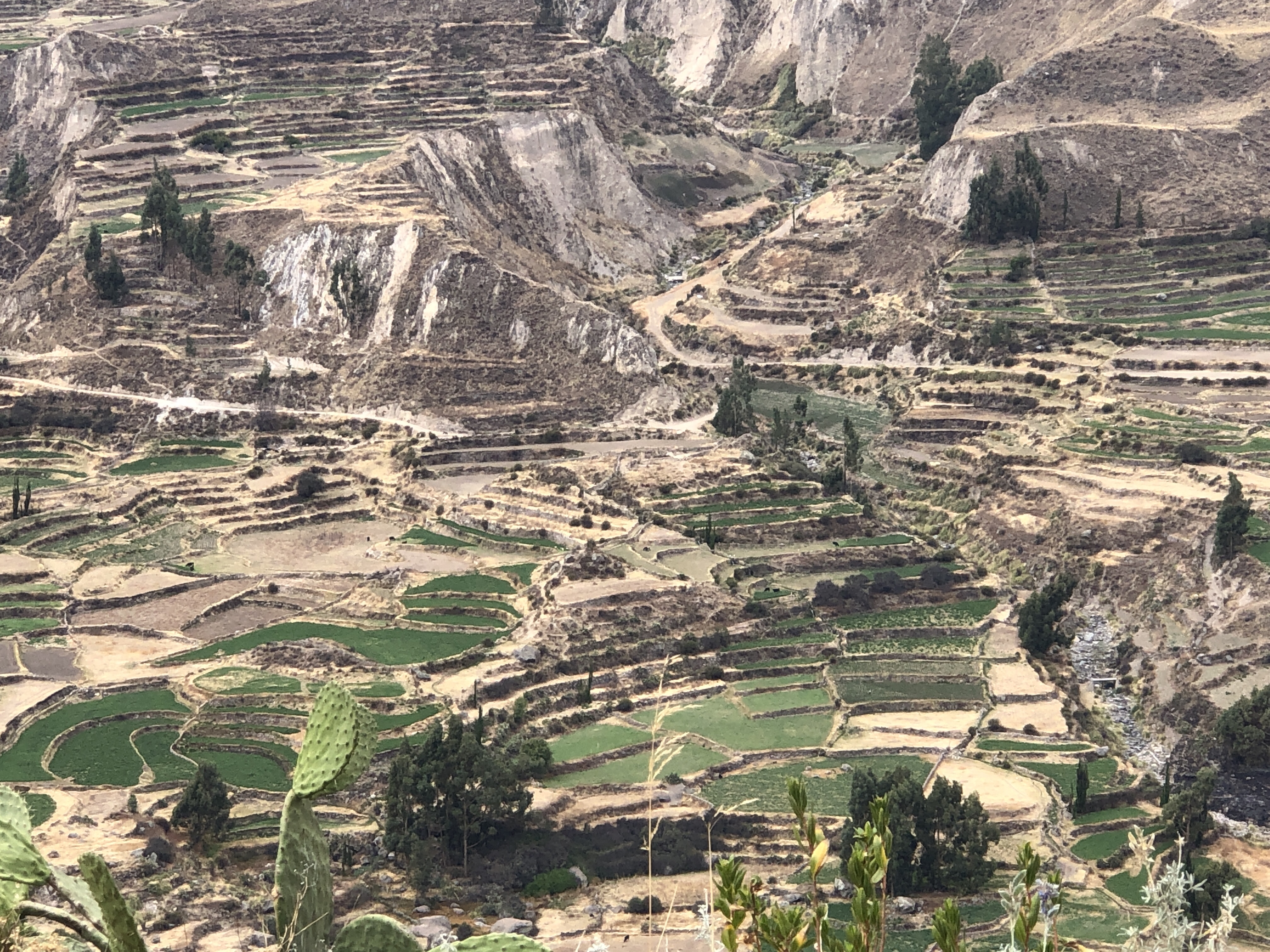
Nearby we noticed the terracing of the hillside. While terracing is still visible in most places in Peru, not all of it is still in use. 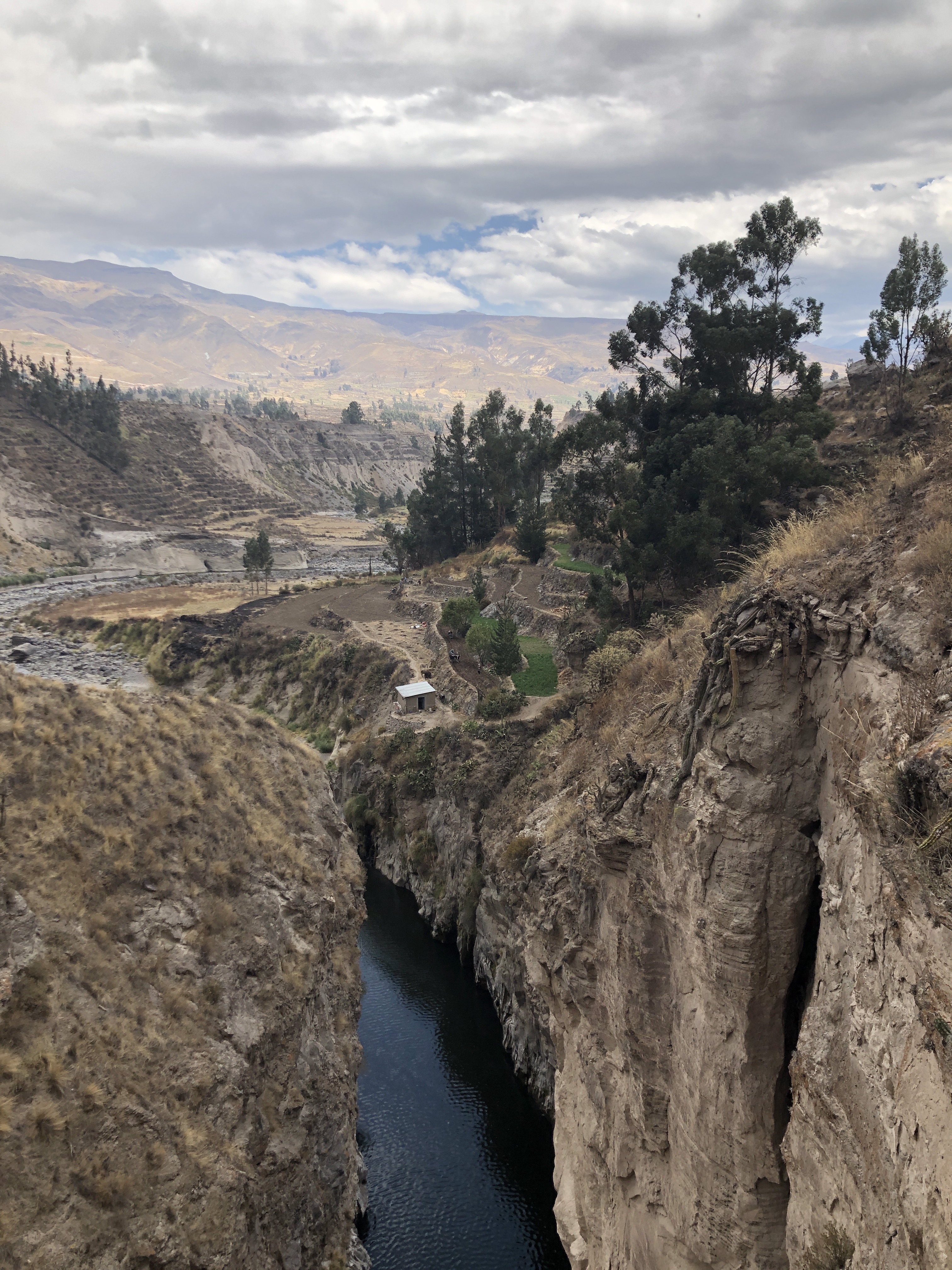


The terracing throughout the Colca Canyon area is ancient and strong. Managing the mountainsides in this way has allowed them to produce massive amounts of agricultural products to feed the huge population of the Inca empire. 

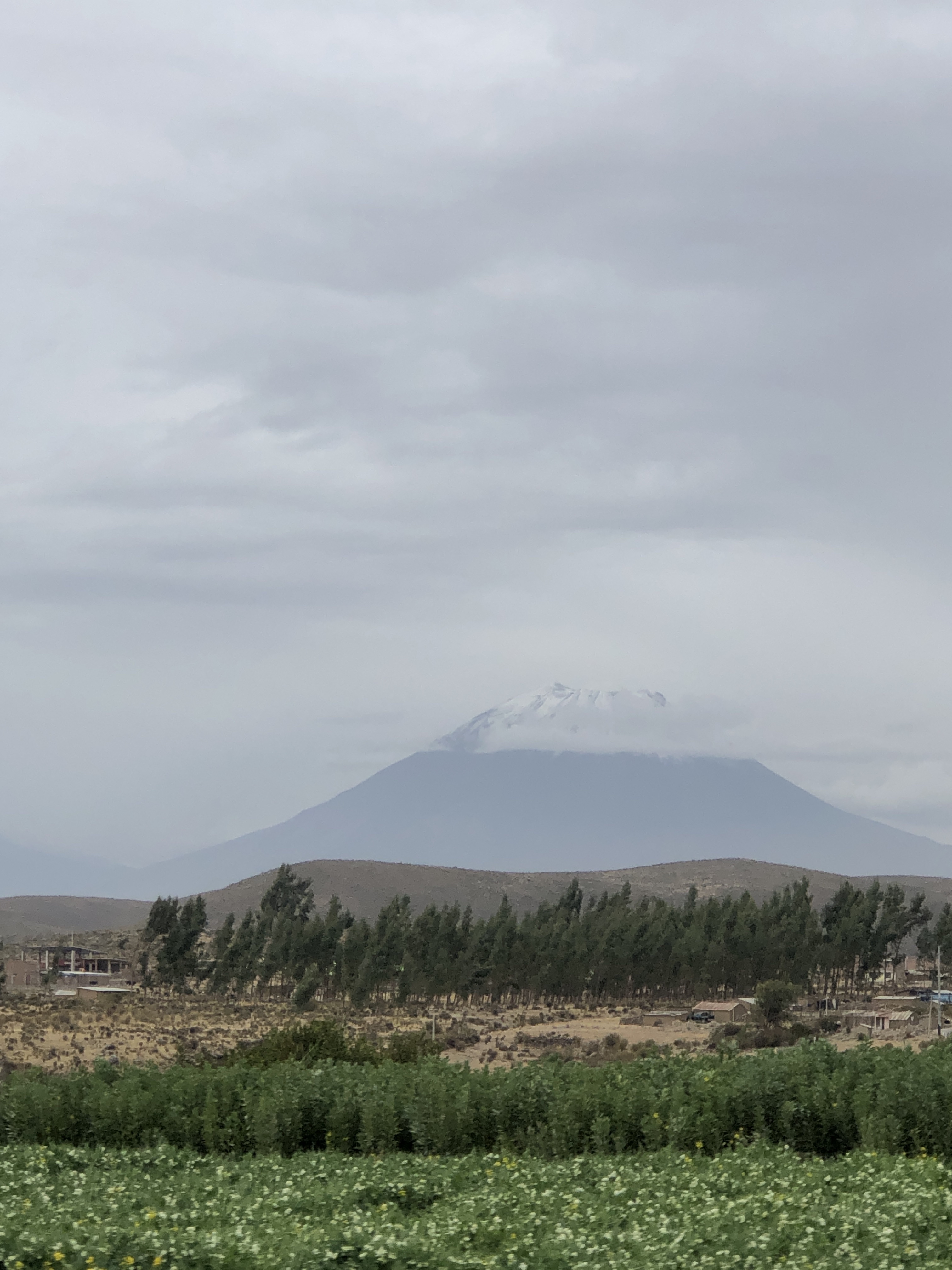

The large, desolate areas of the pampa do offer some interesting features. In one area we located a little mini-volcano. This tiny mound of spewing mud and ash is hot and a bit dangerous. 


We also found amazing sunsets each night from some beautiful and peaceful campsites.


One day as we drove along we encountered a small herd of cattle walking towards us. And at the back of the herd, way out in the middle of nowhere…… a small group of authentic Peruvian gaucheros (cowboys) with their wooly horses and furry dogs. 


Also while exploring in this high elevation we found a natural geyser. This powerful blow hole sprays forth an immense amount of extremely hot water. 


At a campsite closer to an inhabited village we found an old plastic coffee mug. Inside the mug, we found this beautiful version of a black widow spider. But because we have curious dogs with us, we chose to relocate her.


Another interesting species in this area of the pampa is the Puya Raimondi. This is a yucca-like plant that sends up a VERY TALL, flowering stalk. We were able to capture these images of one in full bloom. This stalk is over 12 feet tall.


As we got a little closer to civilization and small towns, we began to see more domesticated animals roaming the pampa. Llama crossing signs appear along dirt roads that see a car once or twice a day, but the crossing is very possible at any moment. 

Llama are naturally quite curious. These ones wandered surprisingly close to the camper to see what we were doing at this lake view campsite. 



And like the cherry on a sundae, there we see something special sitting on top of the marble tomb. It is an exact replica of Michelangelo’s “Piety” which was reportedly used as a model to repair the original! 


After all this we returned to the truck to find this local woman enthralled with the cow skull on the front of our truck. Ironic, huh?

This wraps up our trip around the Colca Canyon area and this portion of the Peruvian pampa.