Lake Titicaca; we all learned it in elementary school and loved saying the name aloud, right? It is actually an interesting lake that shares shoreline with Peru and Bolivia. It is also the highest navigable lake in the world at over 12,000 feet elevation.
We arrived in the city of Puño, Peru and located a local man to take us to the floating islands of Uros to see his family home. On the small island he explained many features of the home and construction.
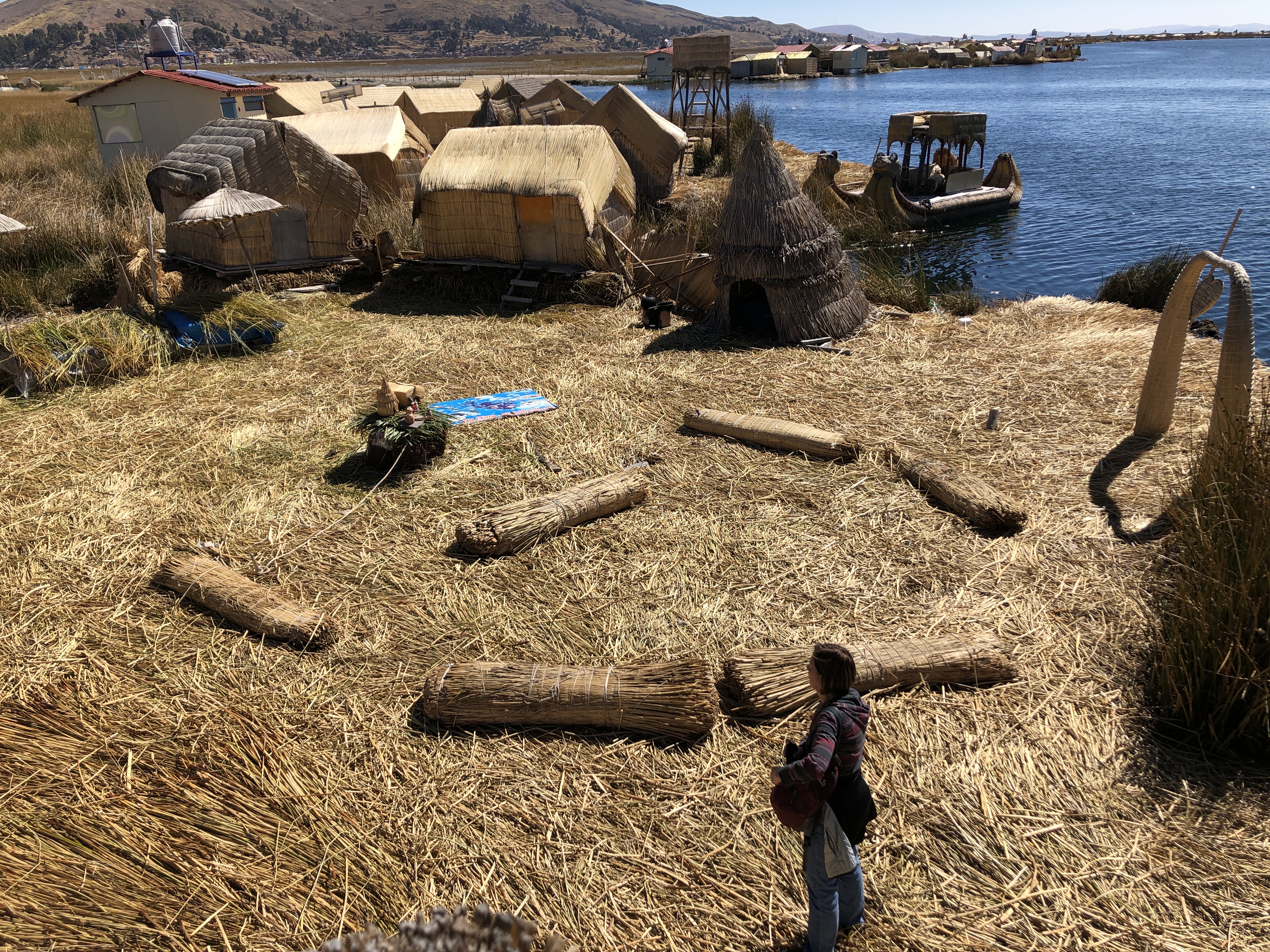
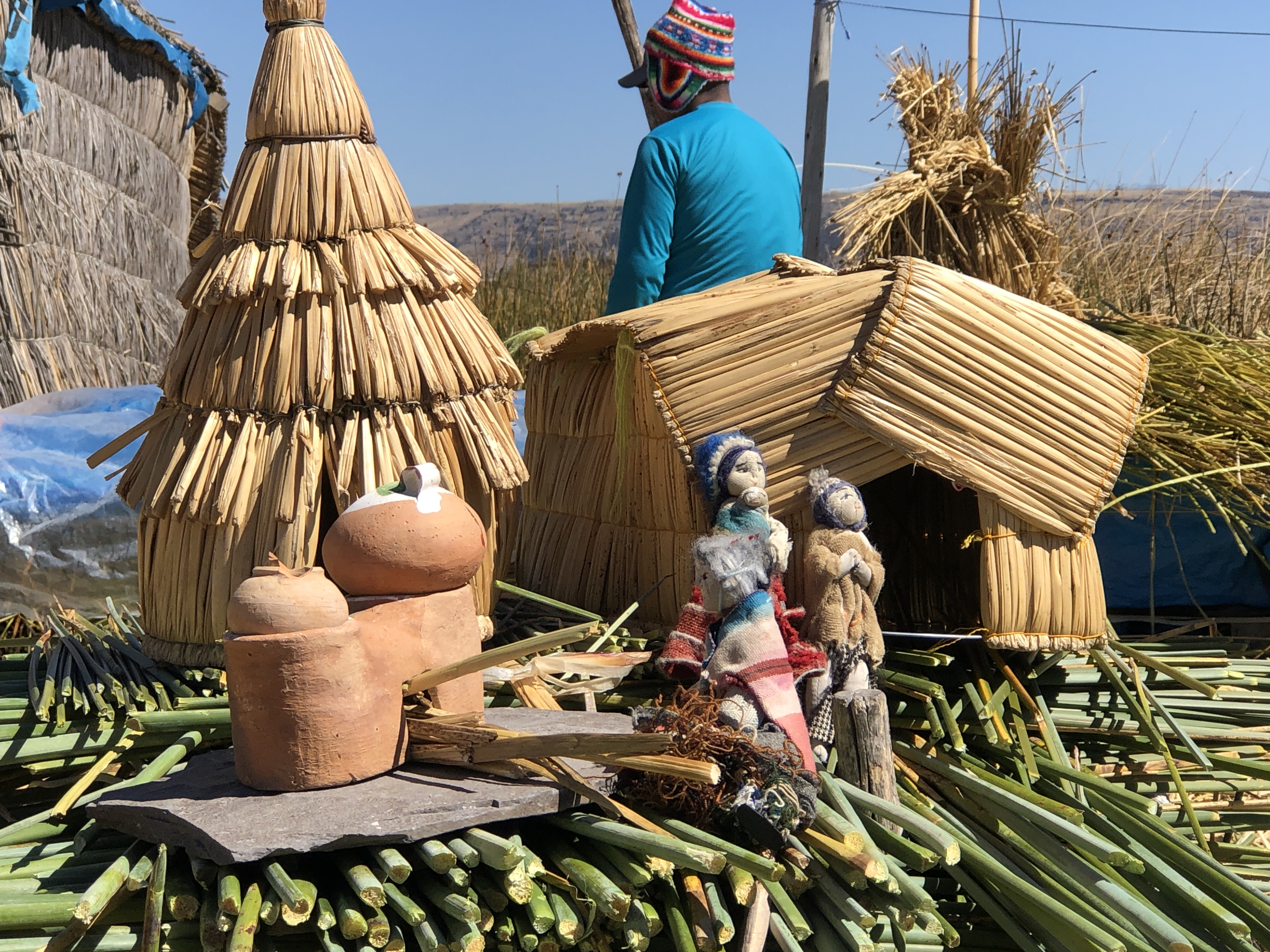
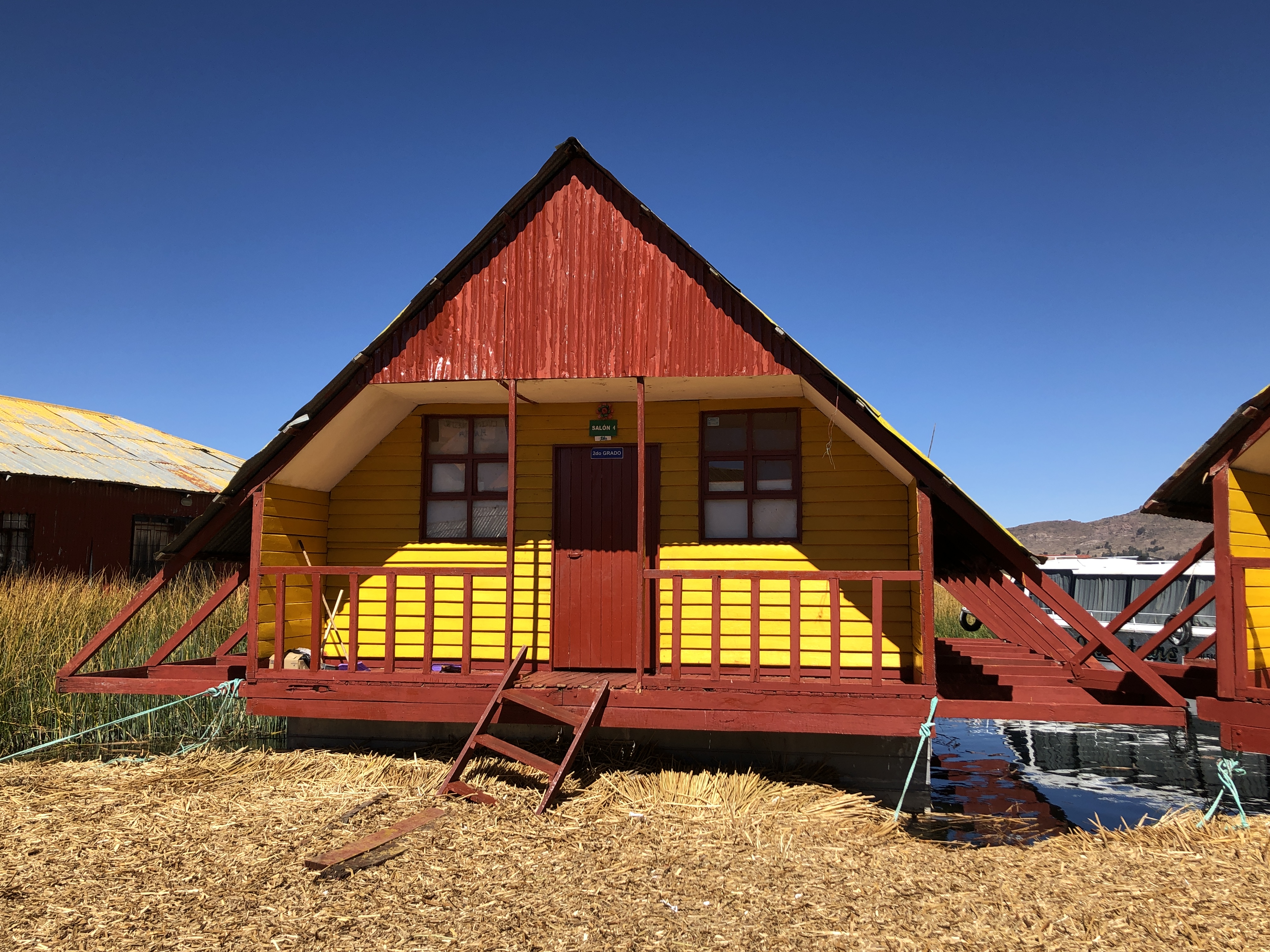
These are the bedrooms of their island home. Daily living is conducted outdoors.This is the kitchen and cooking area for their island home. Note the stone underneath and fire contained in pots. Catching the island on fire is a real danger.Here is view of the living area of their island. They sit on the rolled reeds for furniture.This view of the living room and bedrooms, also shows the size of the island area.This is a view of the neighboring island. Each floating island home is attached to the next but can be quickly released in case of fire.In this photo we see the woman of the house sitting down on the island while she works on an embroidered wall hanging. They sell these to the tourists for income.Each island has a high lookout tower. This is used for tourist photo opps, and also to watch for the family boat returning home for the day.This shows the construction of the island. It begins with square “bricks” of reed roots which are cut and then lashed together to form the base. Then once a month, fresh cut reeds are added on top of the old ones until they are several feet thick. Walking around the island feels like walking on a sponge or a springy mattress.This little diorama represents the family, their rooms and their kitchen. The bedrooms and storage rooms are lifted each month, so fresh reeds can be placed underneath.Our guide took us on an additional boat ride to see the school for the islands. Notice that Mike is sitting on a rolled reed “seat”.The school rooms are built on floating pontoons. They are made of wood and metal. The roof has sections of clearish corrugated plastic to let light in. There is no electricity here.The classrooms are interconnected with ropes and tied to a central “playground” of a floating island. The parents come to place new reeds on the central area once a month,The classrooms have a yellowish light from filtering through the roof. There is no electricity here. But they have standard classroom materials and furnishings.
After our island tour we passed back through the city of Puño. This is a trading city that is located close to the border of Bolivia and also Chile. It is built on a hill along the shores of Lake Titicaca.
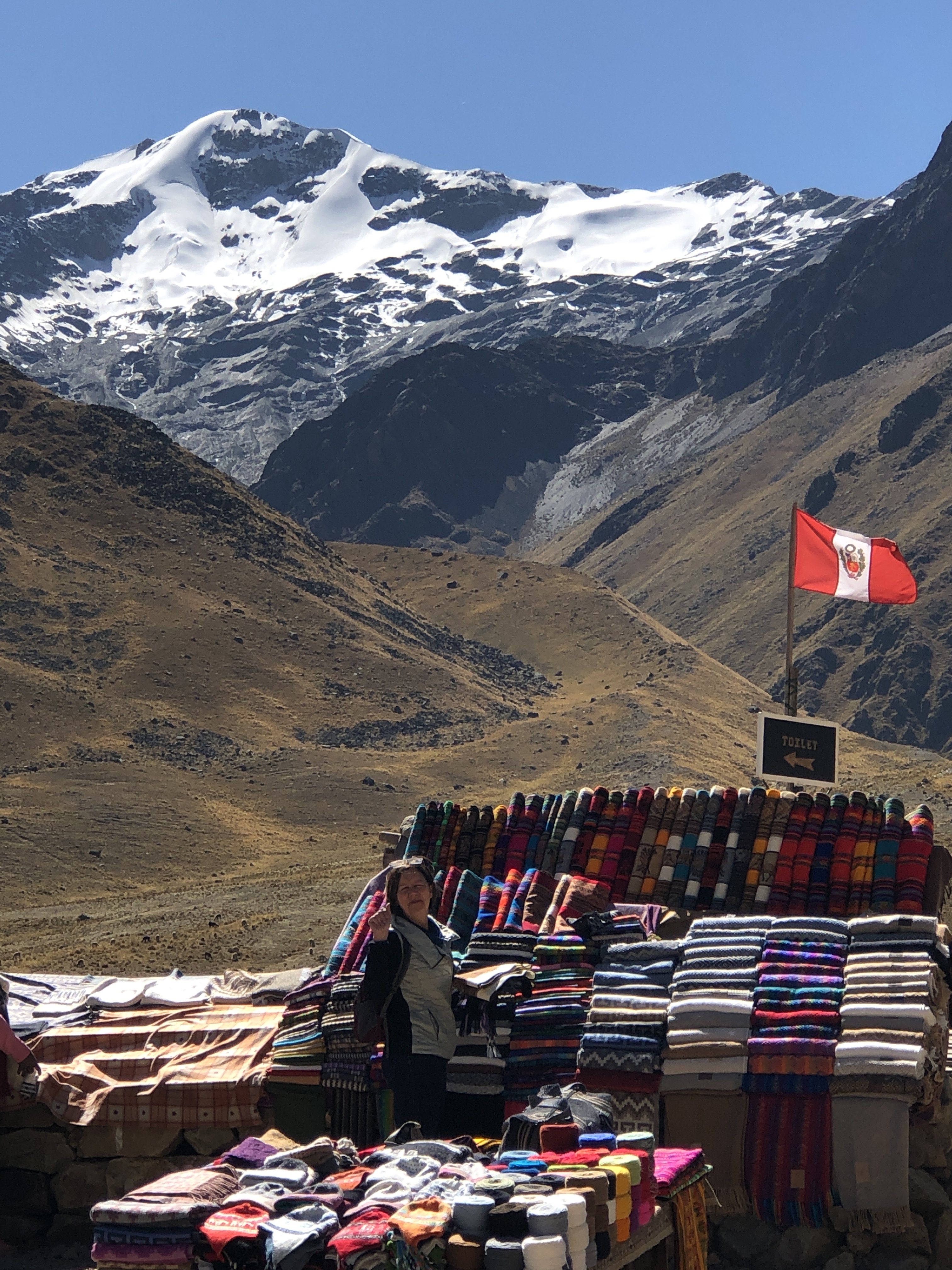
We did not camp in this big city, but instead took the highway out of town. The highway quickly climbed to crazy elevation and we began to feel the effects. We stopped for geocaching, and felt awe for the people riding bikes at this altitude. We also checked out the roadside souvenir stands with some fantastic products. And seriously killer views from their shops! We spent the night on a grassland area at about 14,000 feet. It was desolate, dry and extremely cold. In case you are not clear about just how cold it was, we took this photo. We opened the valve to let out the grey water (hand washing and dish washing water) and went to bed. In the morning we found this…
Several hours later it thawed and finished draining. We left our icy grassland campsite and headed off for more adventures.