


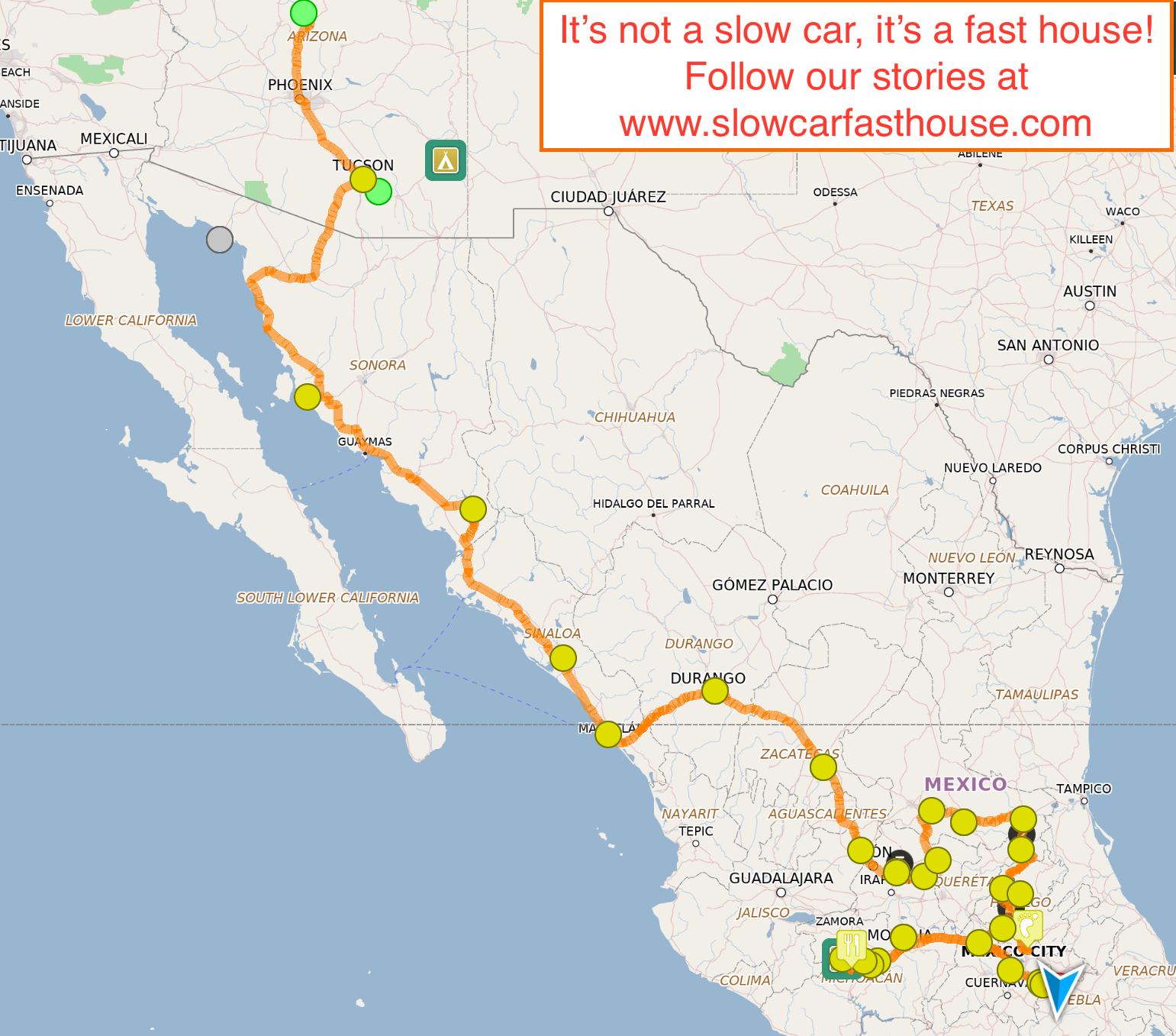
Puebla was a city that we enjoyed during our drive through Mexico back in the early 2000’s. When we passed by the VW plant we stopped at the gates and asked about a tour. We were told that it wasn’t possible. Then magically, within minutes, we were in a classy, open-air VW van being driven around the factory floor. They were still producing Type 1’s (Beetles) at that time. And we saw the process from sheet metal stamping to painting and assembly to testing. We spent an amazing 3 hours being taken behind the scenes by a young German man who was excited to tell us all about the production taking place at the Puebla VW plant. This took so much of our available time that we had to quickly dash on down the highway.
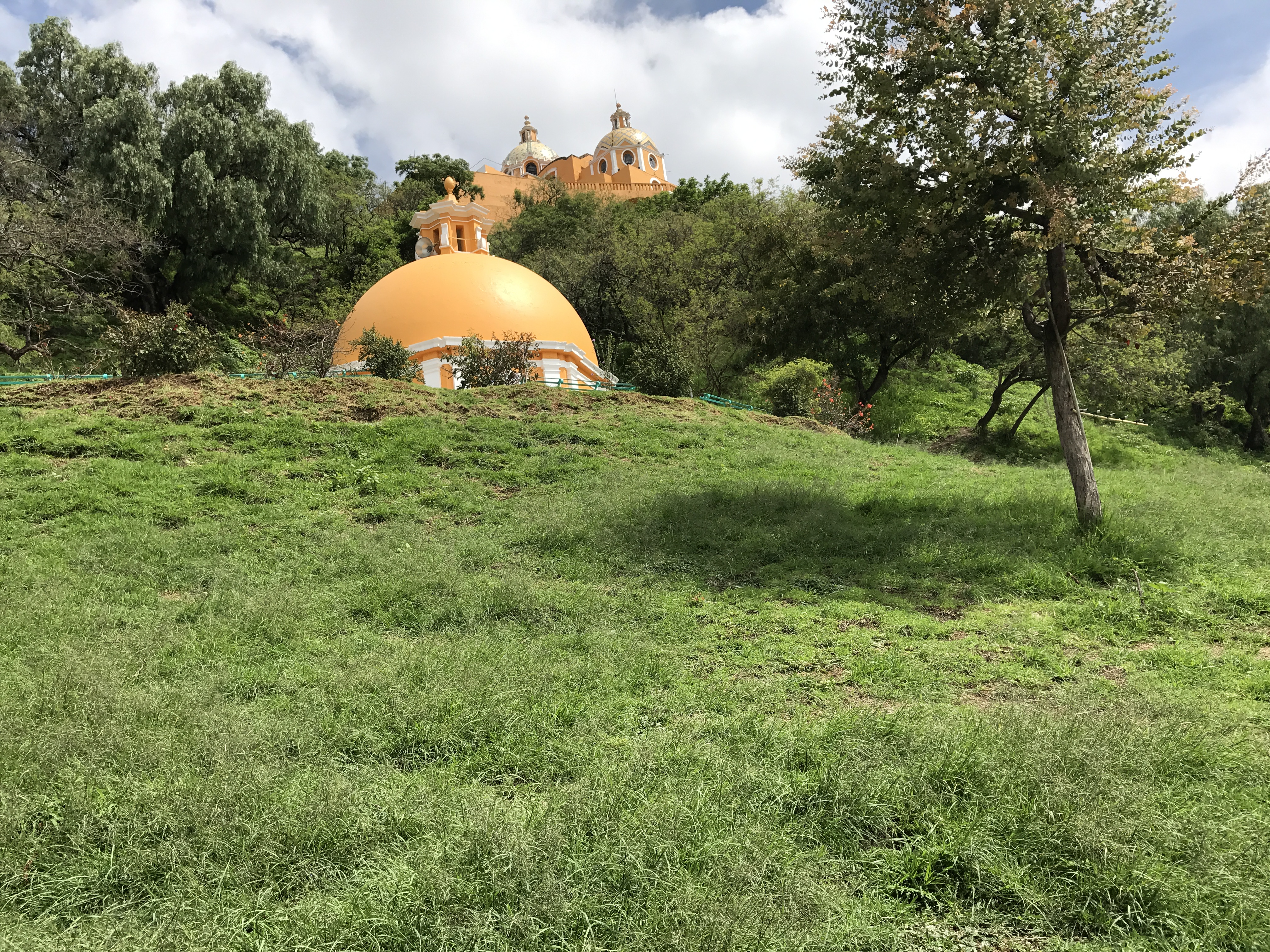
This time we stayed in nearby Cholula, a suburb of Puebla. This gave us an opportunity to see something that we didn’t have time to see before, the Great Pyramid of Cholula! This is the largest pyramid known to exist in the world today. But much of it is still buried under a mountain. The Nahual Indians (who are still around today) call it Tlachihualtepetl which means “man-made mountain”. The pyramid mountain is also notable because it has a huge Catholic church on top of it!




These archeological ruins show evidence of full occupation in both the first and second pyramid. This included animal and human offerings. Although there is more that could be excavated, there is already a great deal to see at this site.
The first pyramid (which is actually a temple) was constructed around 300BC and used for many generations. Over time it was abandoned. Then another, larger temple/pyramid was built over the top of it. But over generations the pyramids began to disappear. Because the outside was made initially with a sort of adobe and a mud-based stucco, it began to deteriorate into soil. Then plants and trees grew larger and larger. Eventually the largest pyramid in the world began to look like a mountain (hence the name mentioned above). The inhabitants moved on to other temples and the city around it grew into a lush farmland.
When the Spanish conquered the native people of Mexico, they determined that the “heathens” could no longer worship in their traditional ways. The Catholics hastily constructed a huge church on top of the mountain. Many of the stones for the steps up to the church and in the walls of the church were taken (unbeknownst to them) from the pyramids and surrounding buildings. In the stone floors of the church you can see the carved designs from the ancients. Even the designs inside the church include elements to entice the heathen-natives to come practice Catholicism. Figures such as jaguars, frogs and snakes appear in various elements inside the church. (Sorry, but no photos were permitted inside) Although local lore told the story of the buried temples, the Spaniards and Catholics saw it as an opportunity to build atop a high hill and convert the natives! 

Another unique aspect of this archeological site is the accessible tunnel system. Visitors can enter and walk through a small portion of the labyrinth that crosses through the early pyramid. They are still exploring these and finding tombs, altars and offerings.


The dark tunnels were a little spooky. But we had fun with it! 

This gigantic (largest in the world) monument is actually located inside the city near where we were camped. We rode our bikes there and Mike even did the laundry on the way………

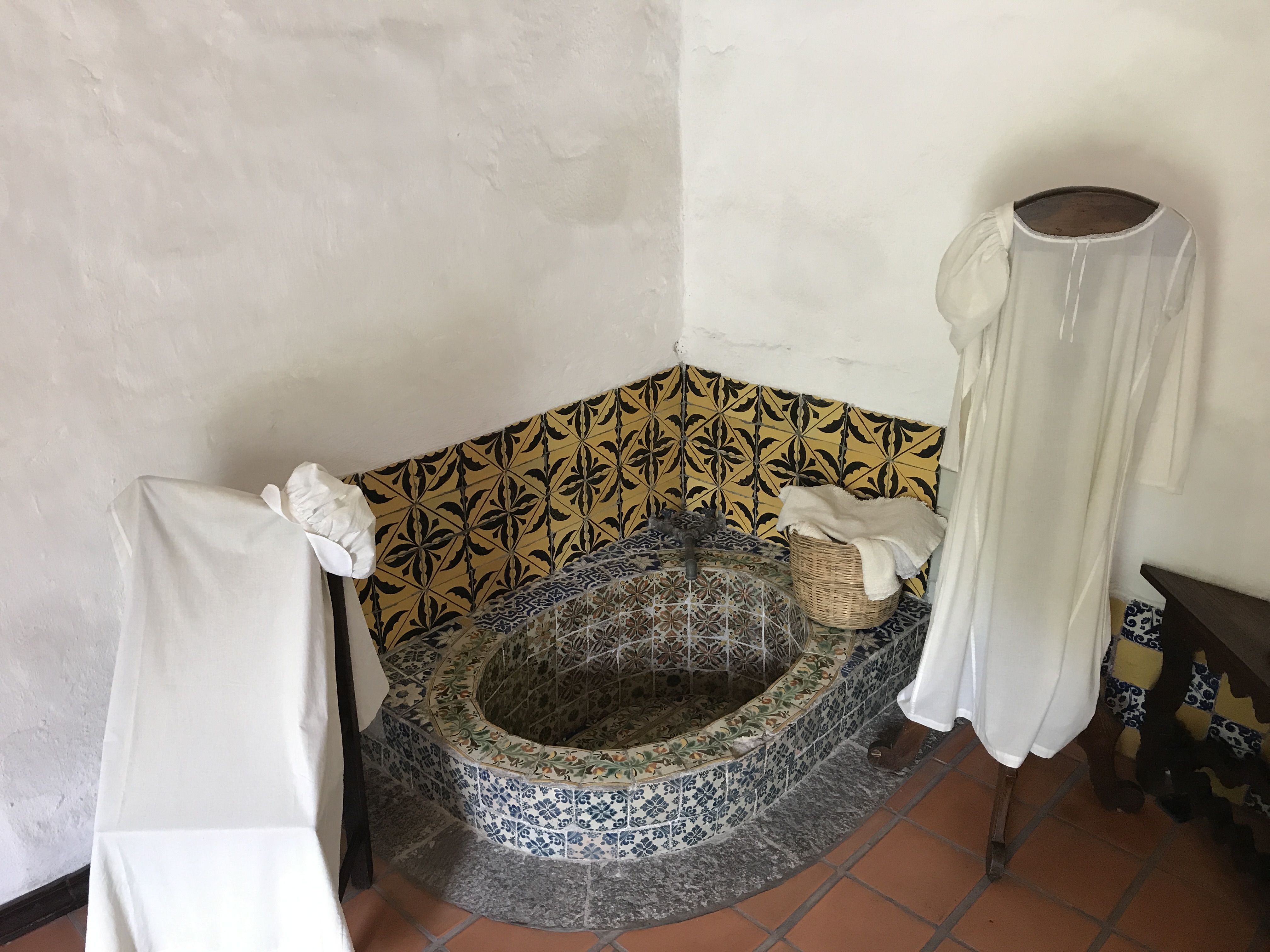


Another thing we learned about is the display of bone and tooth fragments from important figures in religious history. It is a status symbol to have an extensive collection on display in a community church. 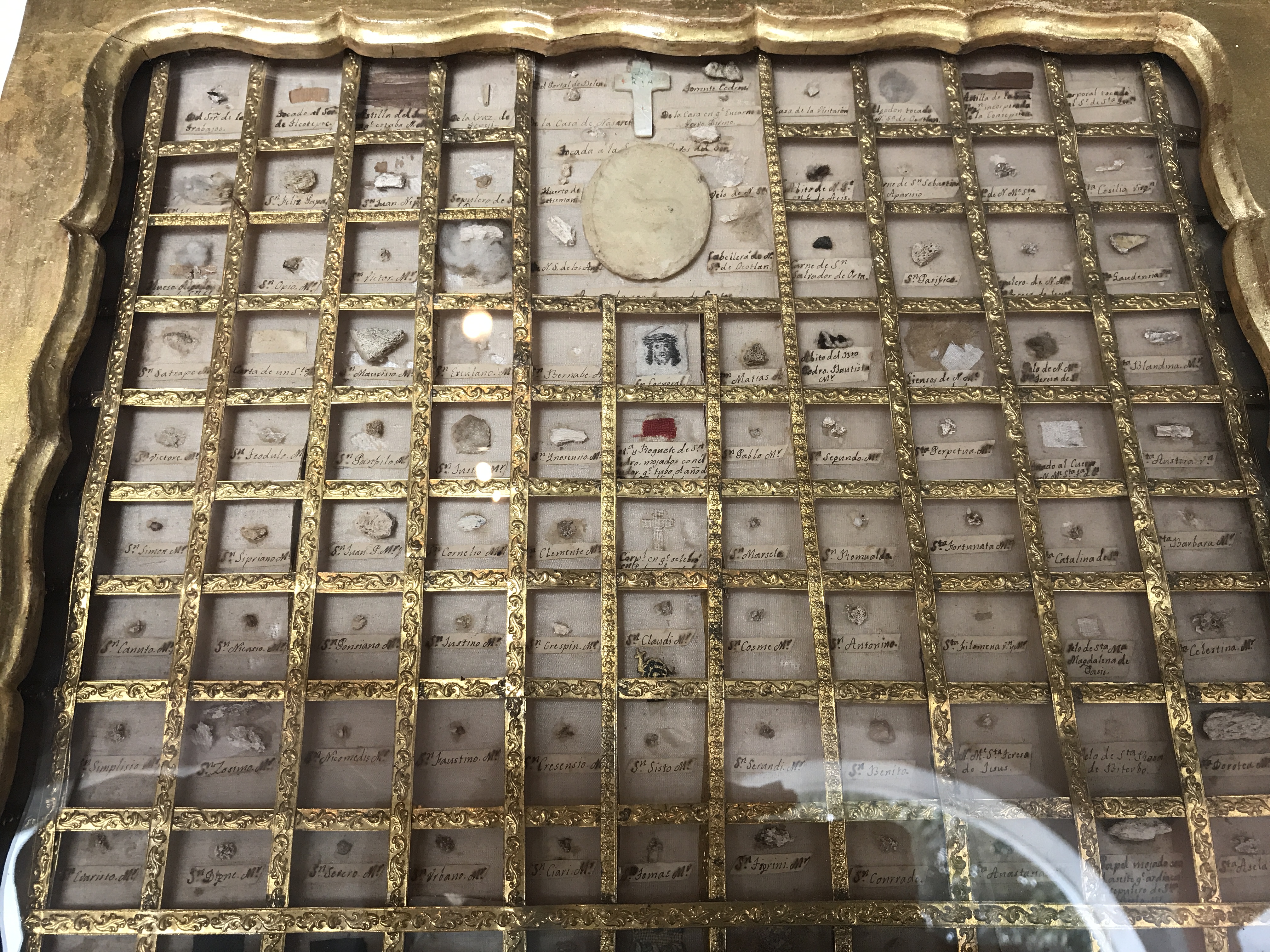
There was quite a bit of rain while we were in Puebla. So we spent an afternoon just hanging out in the camper with the dogs. We have realized that it is important to “take a day off” now and then. We enjoy it (and I can catch up on blog-writing) and so do the dogs! 


Puebla was a lot of fun for us the first time, and again this time.
